
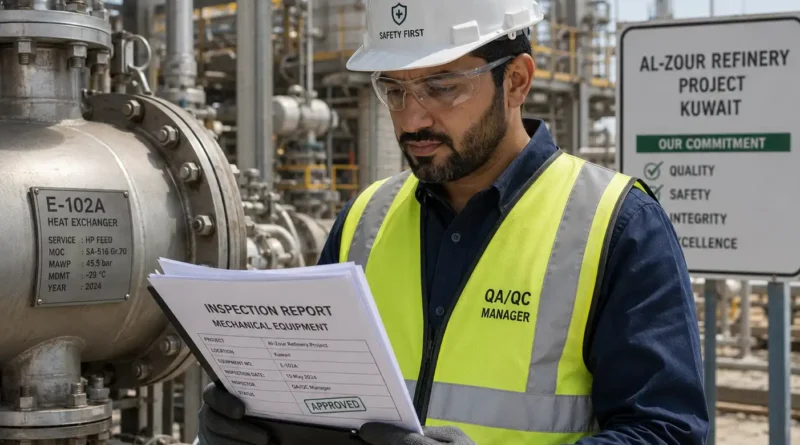
QA/QC Manager Careers in Kuwait: Mechanical Quality Skills for Oil and Gas Projects
QA/QC Manager Careers in Kuwait: Mechanical Quality Skills for Oil and Gas Projects
Quality assurance and quality control are essential in oil and gas projects. In Kuwait, many industrial projects depend on experienced QA/QC professionals who can maintain standards, reduce errors, support safe execution, and make sure that mechanical works are completed according to approved procedures.
A QA/QC Manager in mechanical oil and gas projects has a senior role. This position is not limited to inspection only. It includes planning, documentation, team leadership, audits, non-conformance management, client coordination, and continuous improvement.
For experienced mechanical engineers, this career path can be a strong opportunity in Kuwait’s energy and industrial sector. The role requires technical knowledge, discipline, leadership, and the ability to make quality part of everyday project work.
About QA/QC Management in Oil and Gas
QA/QC management is the process of making sure that project work meets the required quality standards. In oil and gas projects, this is especially important because mechanical systems may operate under high pressure, high temperature, heavy loads, or hazardous conditions.
Quality assurance focuses on the system. It asks whether the project has the right procedures, plans, standards, and controls before work begins.
Quality control focuses on the actual work. It checks whether materials, welding, installation, fabrication, testing, and inspection results meet the approved requirements.
A good QA/QC Manager understands both sides. They do not only react when mistakes happen. They help build a system that prevents mistakes from happening in the first place.
Why QA/QC Managers Are Needed in Kuwait
Kuwait has a strong oil and gas industry, with projects connected to production facilities, refineries, pipelines, storage systems, maintenance works, plant upgrades, and industrial construction. These projects require high levels of safety and quality.
A small quality issue in a mechanical system can lead to delays, rework, equipment failure, safety risks, or additional cost. This is why companies need QA/QC Managers who can control quality from planning to project handover.
QA/QC Managers help project teams answer important questions such as:
Are the project quality procedures approved?
Are inspections being completed correctly?
Are materials compliant with project specifications?
Are welding and mechanical works properly controlled?
Are non-conformance issues recorded and corrected?
Are quality records ready for audit or handover?
Are subcontractors following the required standards?
These questions are important because quality problems can affect the entire project.
Main Responsibilities
The responsibilities of a QA/QC Manager depend on the company, project size, and contract requirements. However, most mechanical oil and gas quality roles include leadership, planning, inspection control, auditing, and reporting.
Common responsibilities include:
Developing and implementing the project quality plan.
Managing quality assurance and quality control activities.
Leading QA/QC engineers, inspectors, and documentation teams.
Reviewing inspection and test plans.
Monitoring mechanical works against approved standards.
Conducting internal audits and supporting external audits.
Managing non-conformance reports and corrective actions.
Coordinating with project managers, clients, consultants, and subcontractors.
Reviewing method statements and quality procedures.
Checking inspection records and test reports.
Supporting welding, fabrication, installation, testing, and commissioning quality.
Preparing quality reports for management and clients.
Following up on quality improvement actions.
A strong QA/QC Manager should be able to guide the team without creating unnecessary delays. The goal is to protect quality while supporting project progress.
Mechanical Quality Control Areas
In mechanical oil and gas projects, QA/QC activities may cover many types of work. The manager should understand the technical requirements of mechanical systems and how inspections are performed.
Common areas may include:
Piping fabrication and installation
Welding quality control
Pressure vessels
Tanks and storage systems
Rotating equipment
Static equipment
Valves and fittings
Mechanical packages
Hydrotesting
Painting and coating support
Equipment installation
Alignment checks
Pre-commissioning and commissioning support
Each activity needs clear procedures and proper records. For example, welding work may require approved welders, welding procedure specifications, inspection reports, NDT results, and traceability records.
Quality Management System
A Quality Management System, often called QMS, helps organize the quality work on a project. It includes policies, procedures, forms, responsibilities, audit methods, corrective action systems, and documentation control.
The QA/QC Manager may be responsible for making sure the QMS is understood and followed by the project team. A QMS should not be only a file that sits in the office. It should guide real project activities.
Important QMS activities may include:
Document control
Internal audits
Quality objectives
Procedure implementation
Inspection planning
Corrective actions
Supplier and subcontractor quality monitoring
Management reporting
Continuous improvement
A strong QMS makes the project more organized and reduces confusion between teams.
Standards and Codes
Oil and gas projects often follow strict standards and technical codes. A QA/QC Manager should understand the importance of these standards and know how to apply them in daily project work.
Depending on the project, standards may relate to:
Mechanical installation
Welding
Piping
Pressure testing
Materials
Inspection procedures
Quality management
Safety requirements
International standards such as ISO, ASME, API, and project-specific requirements may be relevant depending on the scope. The exact standards must always be checked in the project documents.
The QA/QC Manager does not need to memorize every detail, but they must know how to read standards, guide teams, and ensure compliance.
Inspection and Test Plans
Inspection and Test Plans, also known as ITPs, are important documents in QA/QC work. An ITP explains what needs to be inspected, when inspection is required, what standard applies, who will inspect, and what records are needed.
For mechanical projects, an ITP may include stages such as material receiving, fit-up inspection, welding inspection, NDT, hydrotest, installation check, alignment, and final inspection.
A QA/QC Manager should make sure ITPs are practical, approved, and followed on site. If inspections are missed, the project may face rework, rejection, or handover problems.
Managing Non-Conformance
A non-conformance happens when work does not meet the approved standard, drawing, specification, or procedure. In oil and gas projects, non-conformance must be handled seriously and professionally.
The QA/QC Manager may need to review the issue, identify the cause, assign corrective action, and follow up until the problem is closed.
Examples of non-conformance may include:
Wrong material used.
Welding defect found.
Inspection skipped.
Test result not acceptable.
Procedure not followed.
Missing quality records.
Equipment installed incorrectly.
Unapproved subcontractor work.
The goal is not to blame people. The goal is to correct the problem and prevent it from happening again.
Leadership and Team Coordination
A QA/QC Manager is also a team leader. The role may involve managing inspectors, QA/QC engineers, document controllers, and subcontractor quality teams. Good leadership is important because quality work requires cooperation from many departments.
The manager must communicate with:
Project managers
Construction managers
Mechanical engineers
Welding inspectors
Client representatives
Subcontractors
Procurement teams
Document control teams
Commissioning teams
Good communication helps solve quality issues faster and keeps the project moving.
Skills Needed for the Role
A QA/QC Manager in mechanical oil and gas projects needs a mix of technical, management, and communication skills.
Important skills include:
Mechanical engineering knowledge
Oil and gas project experience
Understanding of QMS
Knowledge of inspection and test plans
Welding and piping quality awareness
Audit experience
Report writing
Leadership
Problem-solving
Communication with clients and contractors
Knowledge of standards and codes
Document control awareness
Ability to manage pressure
The role can be demanding because quality issues often need quick decisions. A successful manager should stay calm, clear, and professional.
Qualifications and Experience
Most QA/QC Manager roles require a mechanical engineering background or equivalent technical qualification. Senior roles usually need many years of experience in quality control, quality assurance, mechanical projects, or oil and gas construction.
Common requirements may include:
Degree or diploma in Mechanical Engineering or related field.
Strong experience in oil and gas projects.
Experience in QA/QC engineering or quality management.
Knowledge of mechanical works, piping, welding, and equipment.
Understanding of inspection procedures.
Experience with audits and non-conformance management.
Ability to manage QA/QC teams.
Strong English communication skills.
Knowledge of international standards and project specifications.
Professional certifications in quality, welding inspection, NDT, auditing, or project management can be an advantage depending on the employer.
How to Prepare Your CV
A QA/QC Manager CV should be specific and project-focused. Avoid writing only general phrases like “responsible for quality.” Employers need to see your real experience and the type of projects you handled.
Include details such as:
Oil and gas projects you worked on.
Mechanical systems you handled.
QA/QC team leadership experience.
Inspection and test plan experience.
Audit experience.
Non-conformance management.
Welding, piping, or equipment quality experience.
Standards and codes you are familiar with.
Quality documentation and handover experience.
Client or contractor coordination.
Certifications and technical training.
If you worked on refineries, pipelines, industrial plants, maintenance projects, or shutdowns, mention these details clearly.
Interview Preparation
QA/QC Manager interviews often include technical and leadership questions. Employers want to know how you manage quality systems, solve problems, and handle pressure.
Common interview questions may include:
How do you implement a project quality plan?
How do you manage non-conformance reports?
What is the difference between QA and QC?
How do you handle a subcontractor who does not follow quality procedures?
What mechanical inspections are common in oil and gas projects?
How do you prepare for a client audit?
How do you monitor welding quality?
How do you manage quality records before handover?
Try to answer with practical examples from your experience. A real example is stronger than a general textbook answer.
Career Growth
QA/QC management can lead to strong career growth in the oil and gas sector. With experience, a QA/QC Manager may move into senior quality leadership, project quality management, corporate quality roles, or project management.
Possible career paths include:
Senior QA/QC Manager
Project Quality Manager
Corporate Quality Manager
Quality Lead
Construction Quality Manager
HSE and Quality Leadership Roles
Project Management Roles
Career growth depends on technical knowledge, leadership, documentation accuracy, communication, and the ability to solve quality issues effectively.
Working in Kuwait
Kuwait can be an important destination for professionals in oil and gas, construction, maintenance, and industrial services. QA/QC professionals may find opportunities with contractors, consultants, operators, and service companies.
Before accepting any job offer in Kuwait, applicants should check the contract details carefully. Salary, accommodation, transportation, working hours, rotation if any, visa process, and project location should be clearly explained.
Important Advice for Job Seekers
Be careful when applying for jobs online. Some recruiters may use real company names or vague job titles to attract applicants. Always verify the job source before sending documents.
Before accepting an offer, check:
Company name
Official website if available
Job title
Work location
Salary and benefits
Contract duration
Accommodation and transportation if offered
Working hours or rotation
Visa process
Official email address
Do not pay money to unknown people for a guaranteed job. A professional employer should provide clear communication and official hiring steps.
Final Advice
QA/QC Manager careers in Kuwait’s mechanical oil and gas sector can be a strong opportunity for experienced professionals who understand quality systems, inspections, standards, and project execution. The role requires leadership, technical knowledge, careful documentation, and the ability to guide teams under pressure.
For applicants, preparation is important. Build a focused CV, highlight real oil and gas project experience, mention mechanical quality responsibilities, and apply through trusted sources.
Afwaj Jobs aims to help job seekers understand opportunities in the Gulf job market and prepare stronger applications for suitable careers.