
Civil Structural QC Engineer Careers in UAE: Quality Control Skills for Construction Projects
Civil Structural QC Engineer Careers in UAE: Quality Control Skills for Construction Projects
Civil and structural construction projects in the UAE require strong quality control at every stage. From concrete works and steel reinforcement to structural inspections and documentation, a QC Engineer helps make sure that construction activities follow approved drawings, project specifications, safety requirements, and quality standards.
For job seekers, a Civil Structural QC Engineer role can be a strong career path in the UAE construction market. The role is suitable for professionals who have technical knowledge, site experience, attention to detail, and the ability to work with engineers, supervisors, contractors, and project teams.
Quality control is not only about finding mistakes. It is about preventing problems before they affect the structure, schedule, safety, or final handover of the project.
About Civil Structural Quality Control
Civil structural quality control focuses on checking whether construction work is completed according to the approved design and required standards. This can include inspections of concrete, steel, formwork, blockwork, structural elements, foundations, slabs, columns, beams, and other civil works.
A QC Engineer plays an important role between the design team and the site execution team. The engineer checks that the work being done on site matches the drawings and specifications. If there is a problem, the QC Engineer helps identify it early and supports corrective action.
In UAE construction projects, quality control is especially important because many projects are large, fast-moving, and highly coordinated. Mistakes can become expensive if they are discovered too late.
Why QC Engineers Are Needed in UAE Construction
The UAE has many types of construction projects, including residential towers, villas, commercial buildings, hotels, schools, hospitals, infrastructure works, warehouses, and industrial facilities. Each project requires proper quality checks to protect the structure and maintain project standards.
A QC Engineer helps answer important questions such as:
Is the material approved for use?
Does the work match the approved drawing?
Was the inspection completed before the next activity started?
Are test results acceptable?
Are non-conformance issues recorded and corrected?
Are site teams following the project quality plan?
These questions are important because poor quality can lead to rework, delays, extra cost, safety issues, and client dissatisfaction.
Main Responsibilities
The daily work of a Civil Structural QC Engineer may change depending on the project type and company. However, the role usually includes site inspections, material checks, documentation, and coordination with project teams.
Common responsibilities include:
Inspecting civil and structural works on site.
Checking work against approved drawings and specifications.
Reviewing material approvals before materials are used.
Monitoring concrete works, steel reinforcement, formwork, and structural elements.
Preparing inspection requests and quality reports.
Coordinating with consultants, site engineers, and construction teams.
Identifying non-conformance issues and following up on corrective actions.
Checking test reports for concrete, soil, steel, and other materials.
Supporting the implementation of the project quality plan.
Keeping proper records of inspections, approvals, and quality documents.
Attending site meetings when quality issues need discussion.
Helping reduce rework by identifying problems early.
A successful QC Engineer must be disciplined and organized because quality records are important during project audits and handover.
Site Inspection Duties
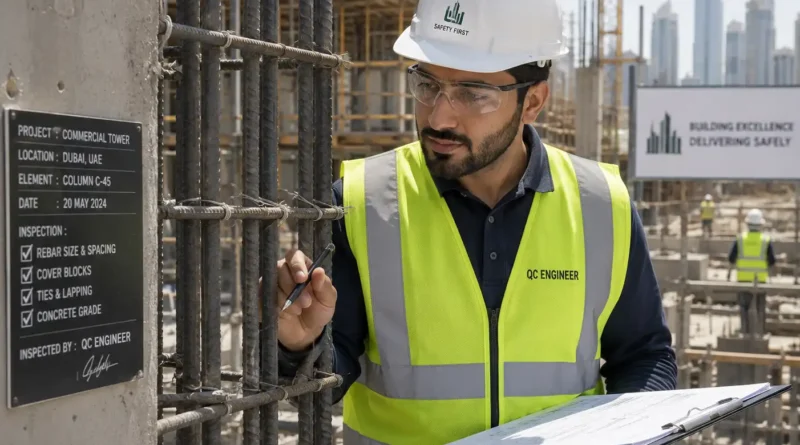
Site inspection is one of the most important parts of the job. Before work is approved, the QC Engineer may need to check many details on site.
For example, before concrete pouring, the engineer may check reinforcement, formwork, embedded items, cleanliness, dimensions, and approved drawings. After concrete work, the engineer may follow up on curing, test results, and any visible defects.
Common inspection areas may include:
Foundations
Columns
Beams
Slabs
Retaining walls
Steel reinforcement
Concrete works
Blockwork
Waterproofing support works
Structural repairs
Finishing-related civil works
Inspection work requires patience and attention to detail. A small mistake in reinforcement placement, dimensions, or material use can affect quality and safety.
Material Quality and Testing
Materials are a major part of construction quality. A QC Engineer may review or verify that materials used on site are approved and suitable for the project.
Common materials that may require checking include:
Concrete
Steel reinforcement
Cement
Aggregates
Blocks
Waterproofing materials
Grout
Mortar
Structural repair materials
Soil or backfilling materials
Testing may be done by approved laboratories or site teams depending on the project requirements. The QC Engineer may review test results and make sure they meet the project specifications.
If test results are not acceptable, the issue must be reported and corrected through the proper quality procedure.
Quality Documents and Reports
Documentation is a major part of civil structural quality control. A QC Engineer should be able to prepare and maintain accurate records because these documents prove that work was inspected and approved.
Important documents may include:
Inspection request forms
Material approval records
Method statements
Inspection and test plans
Concrete test reports
Material test certificates
Non-conformance reports
Corrective action records
Daily or weekly quality reports
Site observation reports
Project quality plan documents
Good documentation helps the project team during audits, client reviews, consultant approvals, and final handover.
Non-Conformance and Corrective Action
A non-conformance happens when work does not meet the required standard, drawing, specification, or approved method. This does not always mean a major failure, but it must be handled properly.
A QC Engineer may need to identify the issue, record it, inform the responsible team, and follow up until the problem is corrected.
Examples of non-conformance may include:
Wrong material used on site.
Work completed without inspection approval.
Concrete test result below requirement.
Reinforcement not matching approved drawings.
Poor workmanship.
Missing documents or approvals.
Incorrect dimensions.
Approved method statement not followed.
The goal is not only to point out mistakes. The goal is to solve the problem and prevent it from happening again.
Skills Needed for the Role
A Civil Structural QC Engineer needs a mix of technical knowledge, site awareness, and communication skills.
Important skills include:
Reading civil and structural drawings.
Understanding project specifications.
Knowledge of concrete and steel reinforcement works.
Site inspection skills.
Quality reporting.
Understanding inspection and test plans.
Awareness of construction standards.
Problem-solving.
Attention to detail.
Communication with consultants and site teams.
Time management.
Ability to work under pressure.
The engineer should also be confident enough to stop or reject work when it does not meet quality requirements, but this must be done professionally and with proper documentation.
Qualifications and Experience
Most Civil Structural QC Engineer roles require a degree or diploma in Civil Engineering, Structural Engineering, or a related field. Some companies may also accept candidates with strong site quality experience.
Common requirements may include:
Bachelor’s degree in Civil Engineering or related field.
Experience in civil construction or structural works.
Knowledge of quality control procedures.
Ability to read drawings and specifications.
Experience with inspections and quality documentation.
Understanding of concrete, reinforcement, and material testing.
Good communication skills.
Knowledge of ISO quality systems can be an advantage.
Experience in UAE construction projects may also help because local project procedures, consultant coordination, and approval processes can differ from one country to another.
How to Prepare Your CV
If you want to apply for Civil Structural QC Engineer roles in the UAE, your CV should clearly show your quality control experience. Avoid writing only general job titles. Employers need to see what you inspected, what documents you handled, and what project types you worked on.
Include details such as:
Types of projects you worked on.
Civil and structural activities you inspected.
Experience with concrete and reinforcement works.
Knowledge of inspection requests.
Material testing experience.
Non-conformance reporting experience.
Quality documentation handled.
Consultant coordination experience.
Any ISO or quality-related training.
Software or reporting tools you can use.
If you worked on high-rise buildings, villas, infrastructure, warehouses, or industrial projects, mention that clearly.
Interview Preparation
QC Engineer interviews often include technical and practical questions. Employers may want to know how you handle inspections, quality issues, and site pressure.
Common interview questions may include:
How do you inspect reinforcement before concrete pouring?
What documents do you check before approving site work?
How do you handle a non-conformance issue?
What is the purpose of an inspection and test plan?
How do you check material approval?
What do you do if site work does not match the approved drawing?
How do you coordinate with consultants?
What concrete tests are commonly used on site?
Try to answer with real examples from your experience. A practical answer is stronger than a general definition.
Career Growth
Quality control can lead to strong career growth in the construction industry. With experience, a QC Engineer may move into senior quality roles, QA/QC management, project quality management, construction management, or consultant-side inspection roles.
Possible career paths include:
Junior QC Engineer
QC Engineer
Senior QC Engineer
QA/QC Engineer
QA/QC Manager
Project Quality Manager
Civil Inspector
Construction Quality Lead
Career growth depends on technical knowledge, documentation accuracy, communication, and the ability to handle site challenges professionally.
Important Advice for Job Seekers
Be careful when applying for jobs online. Some job advertisements may use vague company names or unclear contact details. Always verify the employer before sending documents.
Before accepting any offer, check:
Company name
Official website if available
Job title
Work location
Salary and benefits
Contract terms
Working hours
Visa process if applicable
Accommodation or transportation if offered
Official email address
Do not pay money to unknown people for a guaranteed job. A real employer should provide clear communication and proper hiring steps.
Final Advice
Civil Structural QC Engineer careers in the UAE can be a good opportunity for professionals who have strong site knowledge, attention to detail, and quality control experience. The role is important because it protects project quality, reduces rework, and supports safe construction.
For applicants, preparation is important. Build a clear CV, highlight real inspection experience, understand quality documents, and apply through trusted job sources.
Afwaj Jobs aims to help job seekers understand opportunities in the Gulf job market and prepare stronger applications for suitable careers.